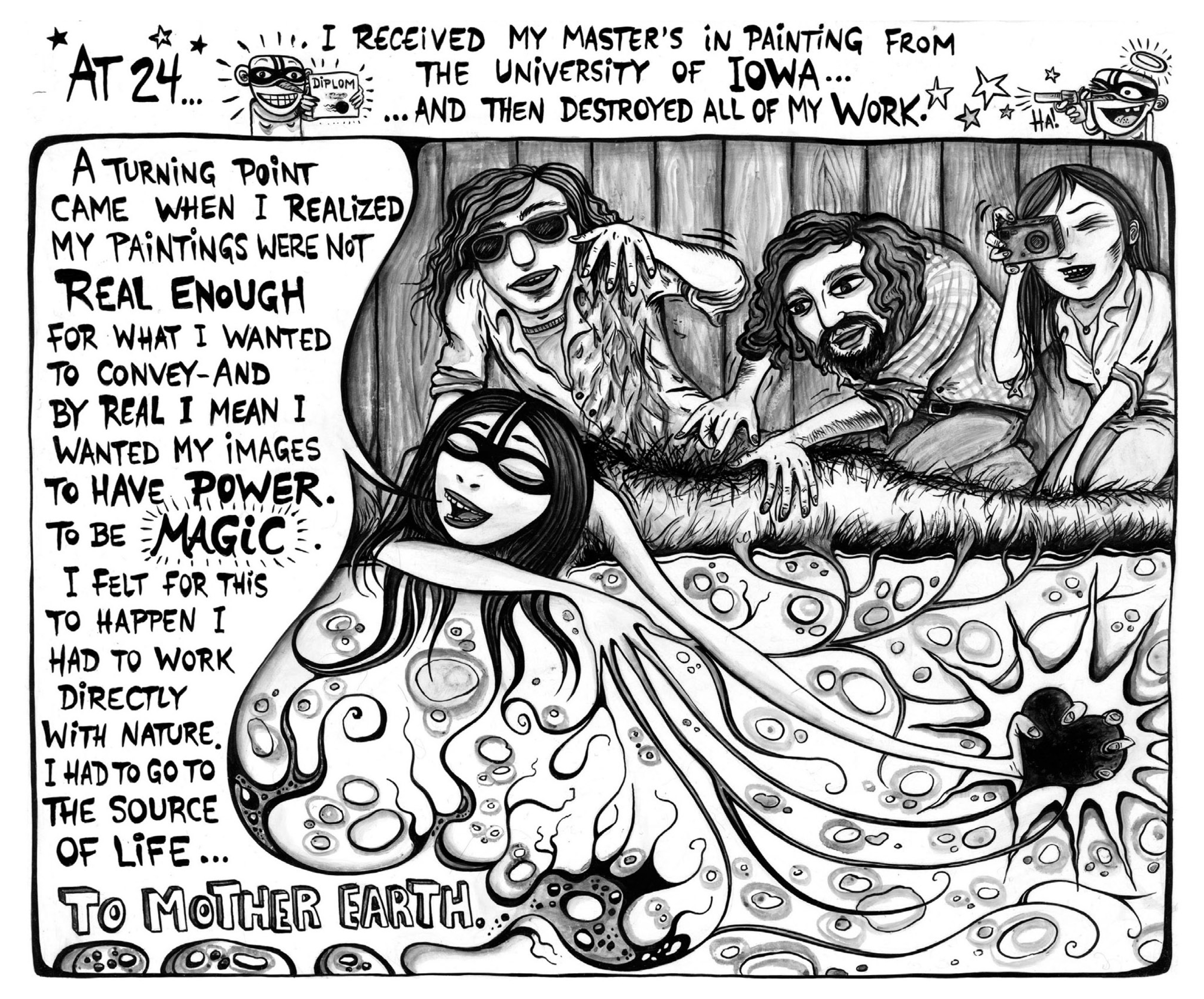
Forever Loitering with Intent
October 14, 2026, New York
Landscape photography is one of the central pillars of Evergon’s practice. For six decades and counting, Evergon has made photographs in the places of underground gay gathering: truck stops, under bridges, and in little clearings on the outskirts of cities. He has made work in cruising grounds on four continents, and although this work absolutely inscribes his name in the annals of the photography of queer public space alongside Peter Hujar, Arthur Tress, Doug Ischar and Alvin Baltrop, his photographs extend beyond the times and places they document.
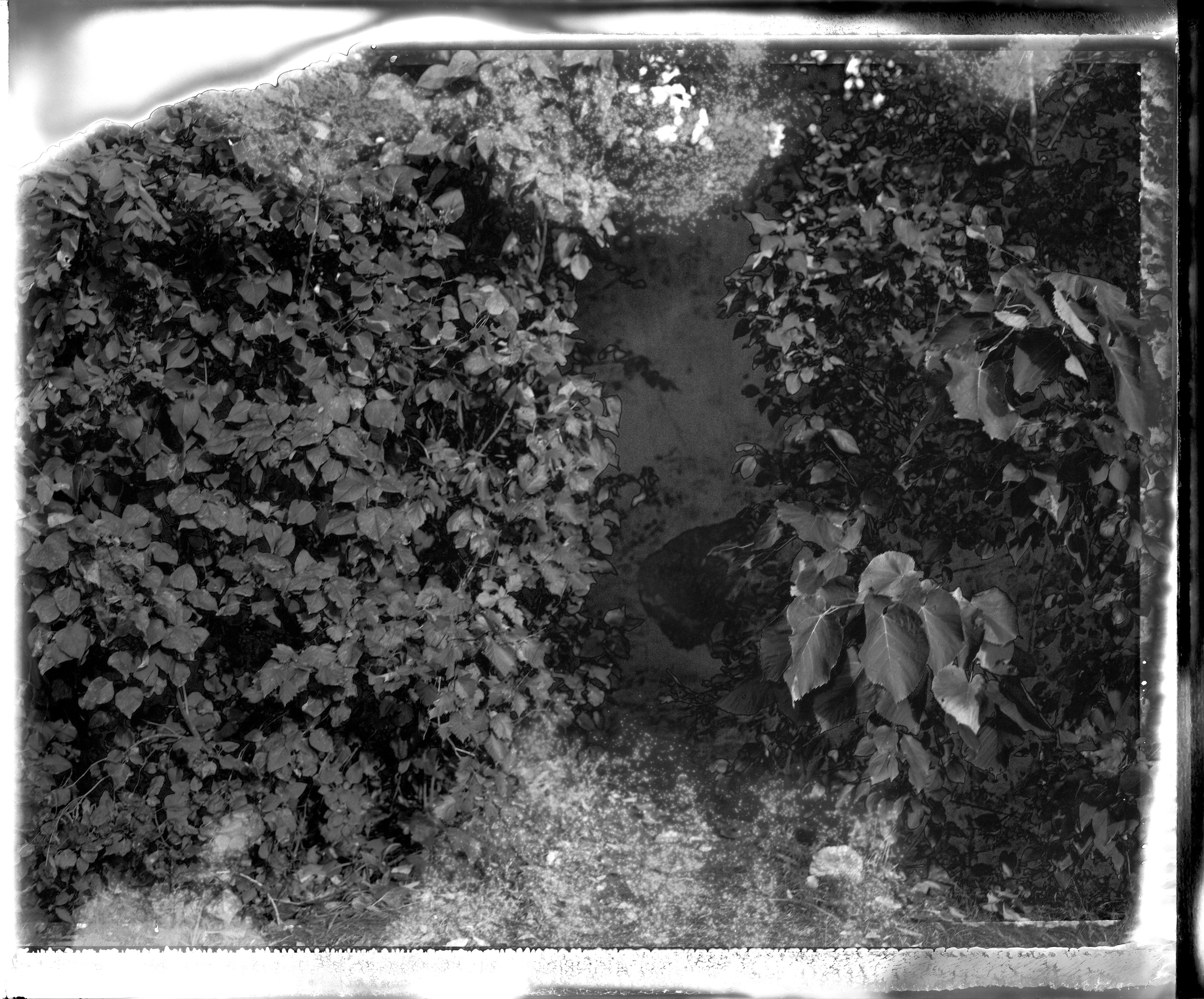
Captured primarily with a now obsolete large format Polaroid film stock intended for studio photographers, Evergon devised a technique that hacked the relatively portable technology. This involved interrupting the intended development process by strategically leaking light into the negative to create a Sabattier effect and postponing the negatives’ development in Tupperware containers of fluid in a cloth cooler with shoulder strap.
These ripples of unexpected, almost opaline gaps in the black and white images are portals, the artist explains, through which the fairies enter the images. The insistence on a subtle flash of camp — no, a flourish of camp for a select few viewers, points to an intentional disruption of the world as it is. The artist has documented a millenarian underground world, and in the same breath, spoils its documentary function. For some photographs, models are invited to pose in costume in the secret sex forests of Chicoutimi. For others, the artist patiently waits until those who could be incriminated have left the grove before he documents it, then carefully, gently spoils it.
Evergon grew up in an era when all gay sex was illegal in Canada, punishable by fines, imprisonment, at times even chemical castration. This was an era when children were forced to endure conversion therapy if parents suspected they were gay or trans. He graduated with a BFA from Mount Allison University in 1970, the year after homosexual acts were partially decriminalized in Canada. Yet this legal reform was limited: an exception was added to the Criminal Code that offered legal protection only to two consenting adults engaging in sexual acts in private, in a room they owned or rented. In the woods, in that one specific department store toilet stall, or down a path along the highway past the truck stop, in the filthy little warrens and glens where our people have gathered beyond the prying eyes of the law, an ancient ritual drama continues to play out.
With the words “sodomy”, “loitering with intent” and “gross indecency” still in the law throughout the self-proclaimed progressive Neoliberal West through the 1980s, queer life was slow to emerge defiantly from the shadows, so great had been the cost of affiliating with such foul epithets. But as we took up our rightful place in the sun, those secret places where we have long been free to be ourselves, and indeed those places where we often used to become ourselves, faded from focus. It was not until the resurgence of park cruising over the past two decades, alongside a renewed and more articulate understanding of the right to assembly, that these spaces began to reclaim their place in queer consciousness.
Through all these vicissitudes, for seven decades, Evergon has taken up black cloth cooler bag with its leaking Tupperwares of liquid and entered the landscapes that were our first homes, to read the public texts scratched into tree trunks and spray painted under bridges, usually by himself. The vast majority of the landscape photographs reveal spaces mostly empty of humans. What we see is a profound symbolism of the opening, albeit an opening that is protected from the outside. I often wonder where the people are, if they’re just out of sight.
The landscapes’ absence of people structures these images, you might say, as much as they distinguish Evergon’s work from his contemporaries who document the bombastic scenes of sexual indulgence of the 20th century gay outdoors. Looking at these gaps tends to open something in my heart, too, the longer I linger in them. These thickets hold the memory of the generation that died of AIDS and inactive governments. This landscape is a playground, a stage, an empty lot, a spa, a fairy ring, a school, a graveyard.
This summer, commissioned to create a new image of the gay city forest, Evergon stumbled upon one final unopened pack of the long-discontinued Polaroid film stock. Expired by a decade, about half the exposures produced images. On a warm day in September, by a stroke of providence or kismet, I had the honour of joining the artist as he documented one of our living cruising grounds using his original technique. The artist read so much subtle meaning from the suggestive twist of the footpath that wended through an inner-city park, covered in poetry etched into a copse of Cottonwoods. I will cherish this memory for the rest of my days.
For people who were told as youth in this country that we were “against nature” to turn around and survive an epidemic, with our stories intact, with our humour intact, and to pull off that thriving “against nature” in nature itself, now that is quite the feat. The mysterious monuments to timelessness that Evergon has deftly constructed stand sentinel to time. They proclaim our claim to our glades, groves, clearings, paths, and nests in a hushed tone: a word-of-mouth monumentality. They preserve openings and portals in time and in history. They preserve the defiant fact that where we screw is secret.